Accidental Discovery from First Fantasy Campaign
Exploring Alignment Systems from the Twin Cities gaming circle adds further evidence of Chainmail's early influence

I’m not sure why people believe that “Dave never played that way” “Arneson never used Chainmail” etc. I think that myth is widely debunked. But thanks to some people questioning when alignments appeared in Blackmoor, we ended up with an accidental discovery.
Question on Discord: “Is it known who brought law, chaos, and neutrality and alignment into OD&D? Arneson’s games had good and evil, but not law and chaos, right? I know Gary convinced Professor Barker to change stability and change to law and chaos (which was thankfully quickly changed back later)”
1975
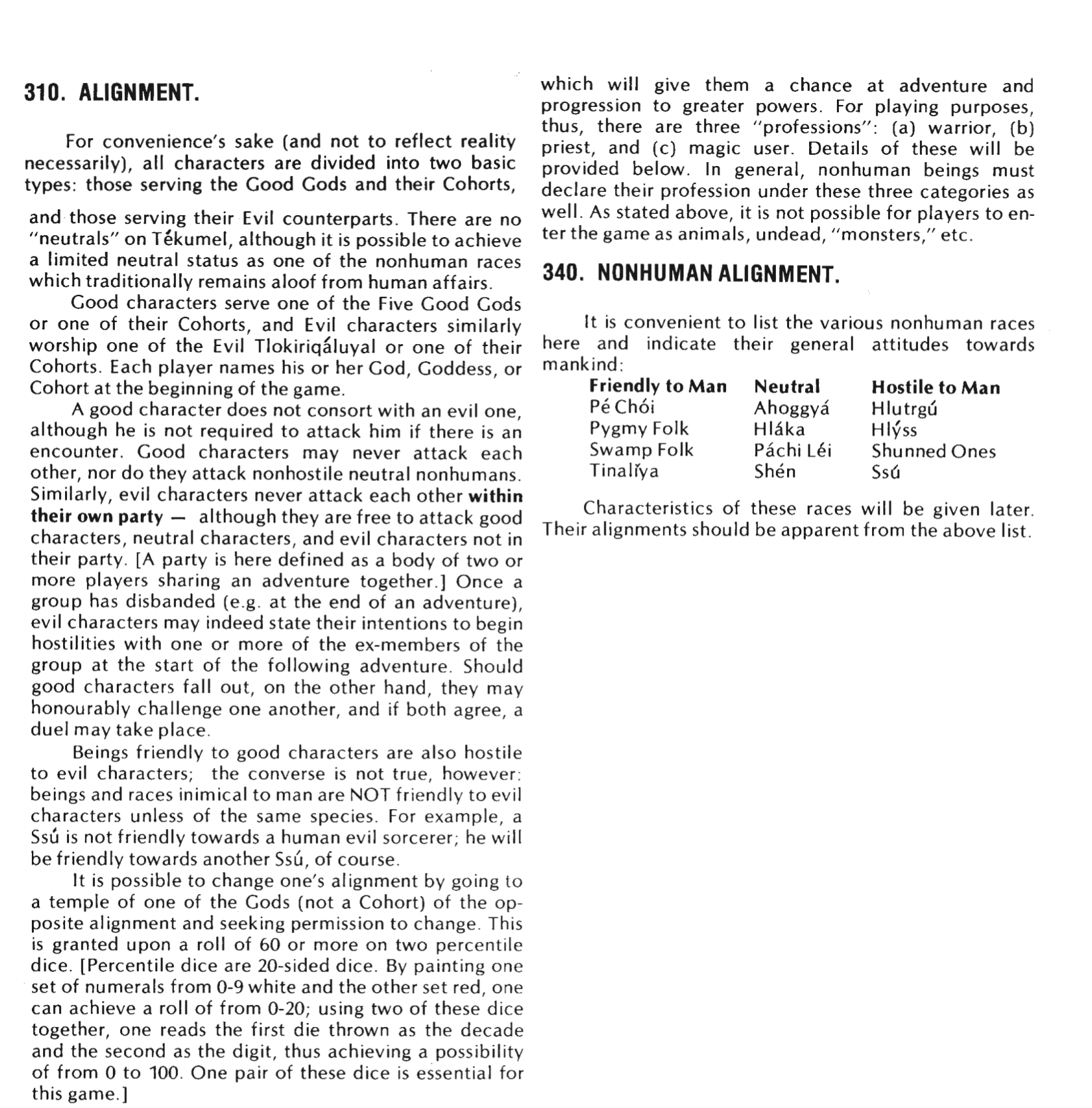
Allow me a brief digression into alignment in MAR Barker’s Empire of the Petal Throne published by TSR in 1975. The alignment system is Good versus Evil and monsters don’t necessarily fall into those neat categories. I’ve chopped up EPT pages 11 - 12 a bit to fit this section into a single image. Also, this discussion of the dynamics of evil characters banding together with other alignments in an adventuring party for a temporary goal presages my next post which will (* barring my usual squirrel chasing) take on player versus player in both the Blackmoor and Greyhawk campaigns.
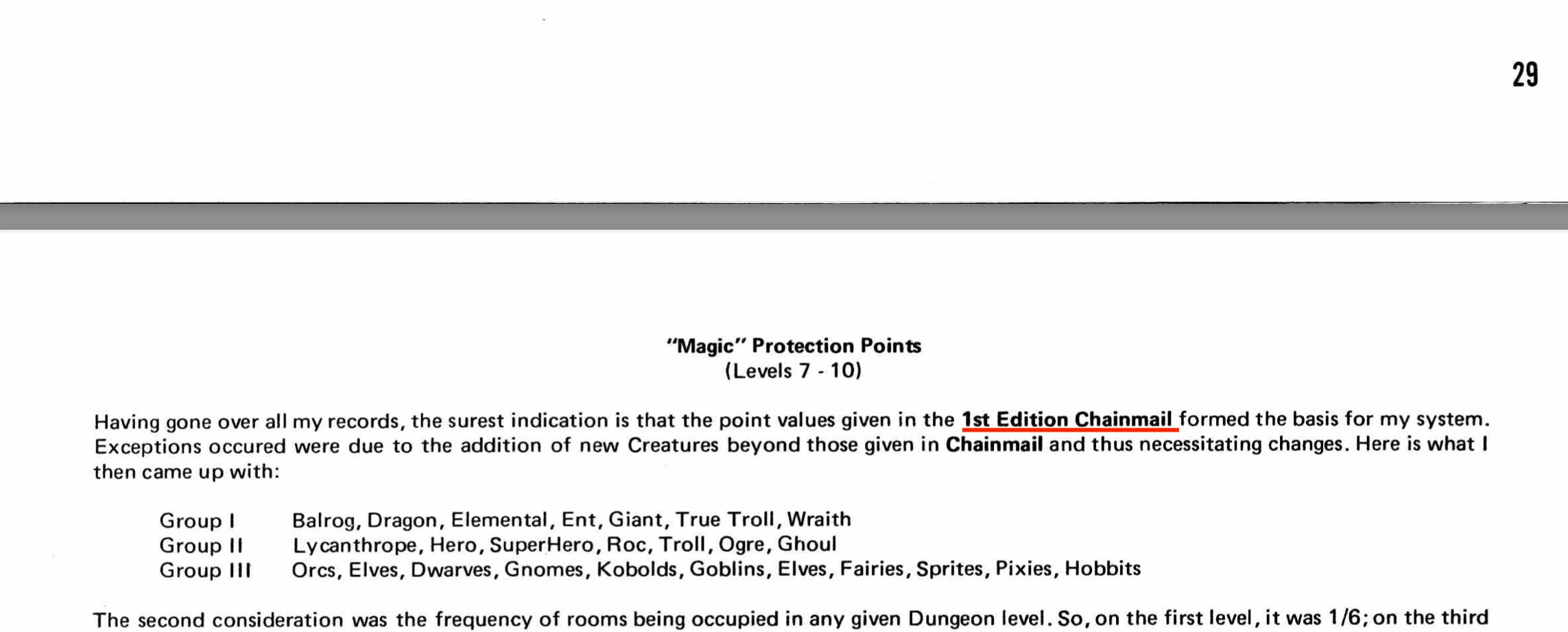
In First Fantasy Campaign on page 30, Dave Arneson flatly tells us that he used Chainmail 1st edition to help stock castle Blackmoor’s dungeons. Perhaps this was the basis of the alignment system used in the Blackmoor campaign from the very start? We will come back to this in a minute.
1974
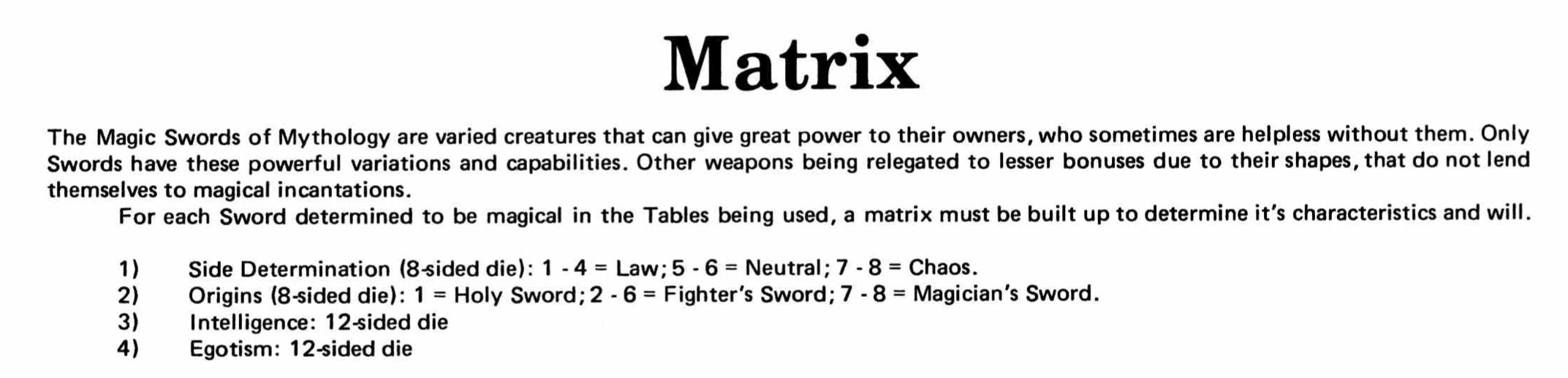
FFC page 45 has references to Law, Neutrality, and Chaos in the second method for generating magical swords. (The first method was undocumented, but I have reversed engineered it since Arneson gave us plenty of example artifact-level swords in FFC. See Midwest Fantasy Wargame for all the details.).
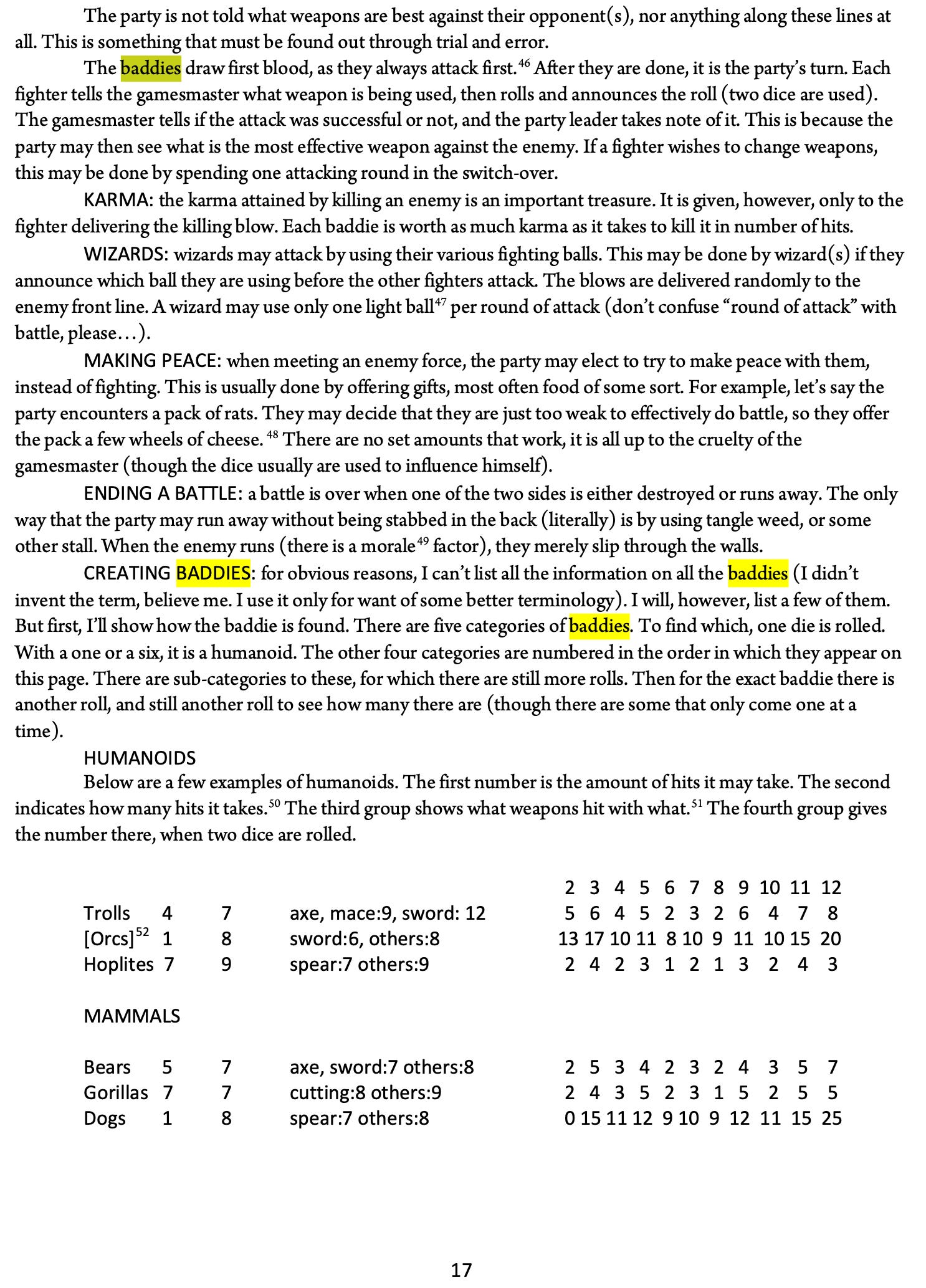
In the first few pages of FFC, Arneson lays out his scheme for creating a four-season military campaign that will provide an overarching theme for Year 3 of play in Blackmoor. As part of this scheme we see the fantasy forces for the Egg of Coot (the big-bad of that campaign world). These forces are aligned with Chaos. Year 3 is arguably 1974. It depends on when you put the start of the Blackmoor campaign. Arneson may have begun work on it as early as December 1970. I have seen March 1971 listed as the beginning of play, but the most firm date we have is the Medieval Braunstein in April 1971. Thus, this Blackmoor Year 3 campaign was likely meant to run from January 1974 - December 1974.
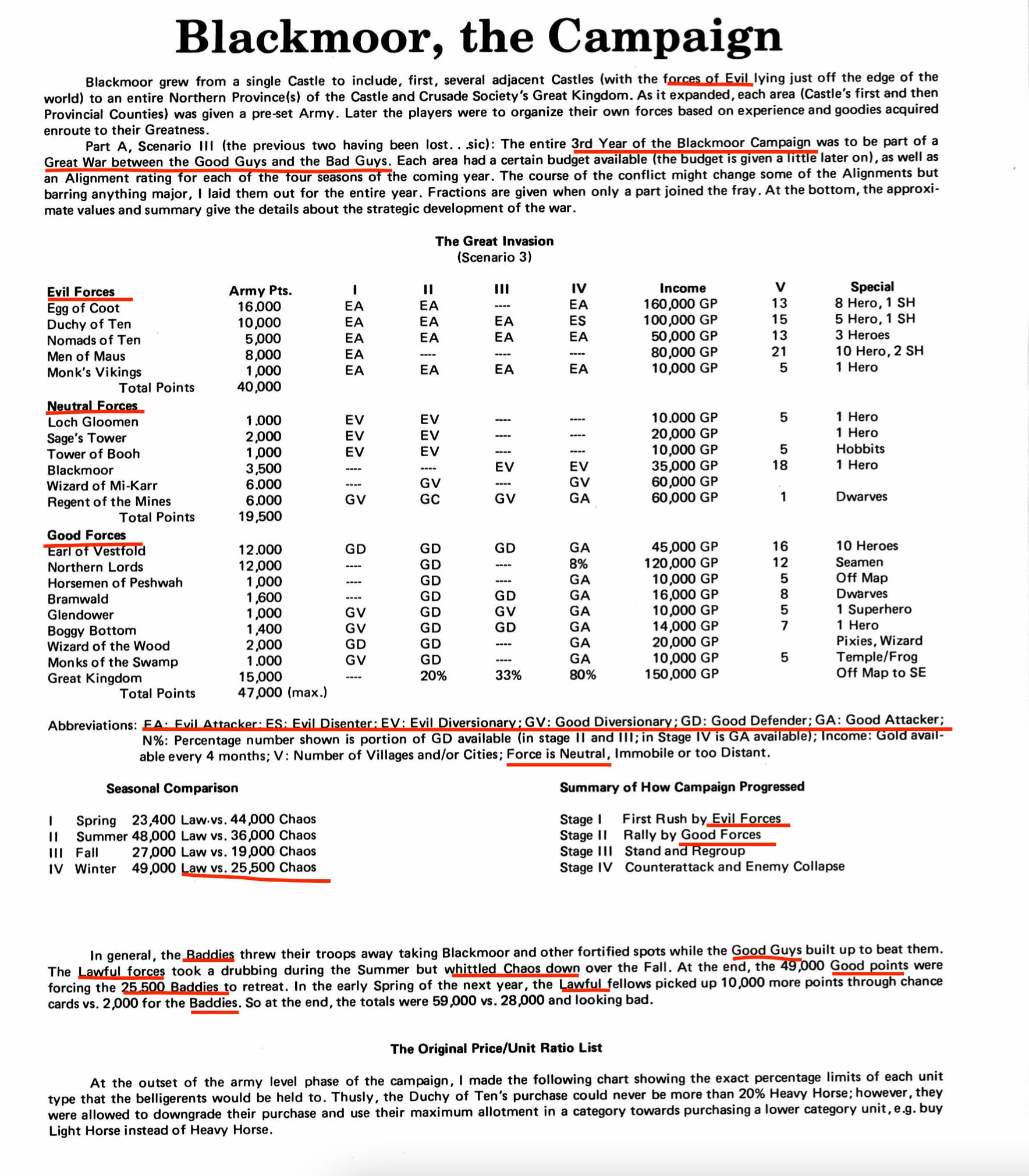
Arneson and the Blackmoor bunch refer to monsters generically as “baddies” and on page 4 we also see that Good is conflated with Law and Evil conflated with Chaos. The best we can say is that sometime in late 1973 Arneson likely laid out his campaign for 1974 and the three alignment system of Law, Chaos, and Neutrality were firmly established by then.
As an aside, the term “baddies” was so widely used that it shows up in the periphery games within the Twin Cities such as Craig VanGrasstek’s The Rules To The Game of Dungeon too. (Text reassembled, footnoted, and commented upon by Jon Peterson).
1973
Both of the 1973 draft rules (Arneson v. Gygax + Mornard Fragments and Beyond This Point Be Dragons / Dalluhn Manuscript) have Evil High Priests (conflating evil with the chaotic cleric class) and the standard alignments. These drafts were likely created in Spring - Summer 1973. By the time Mike Mornard moved to university (Sept - Oct 1973) the Arneson v. Gygax draft was definitely in place and, with it, the three alignment system.
1972
Moving further backward in the timeline, Greg Svenson’s initial dungeon delve featured a magical sword that gave two of the players an electric shock when they tried to pick it up. He dates this delve at Christmas Break 1970-1971. This does not align correctly with multiple independent sources. Hawk & Moor: The Dragon Rises (aka vol I, p. 203) puts this delve on January 1, 1972. This seems like a better placement. This type of magical sword was not from the initial artifact level batch that Arneson created. Thus it was generated using Arneson’s second method which had actual alignments for the swords. This far pre-dates the demonstration game in Lake Geneva that Arneson and Megarry gave to Gygax and crew in November 1972. Amazing!
1971
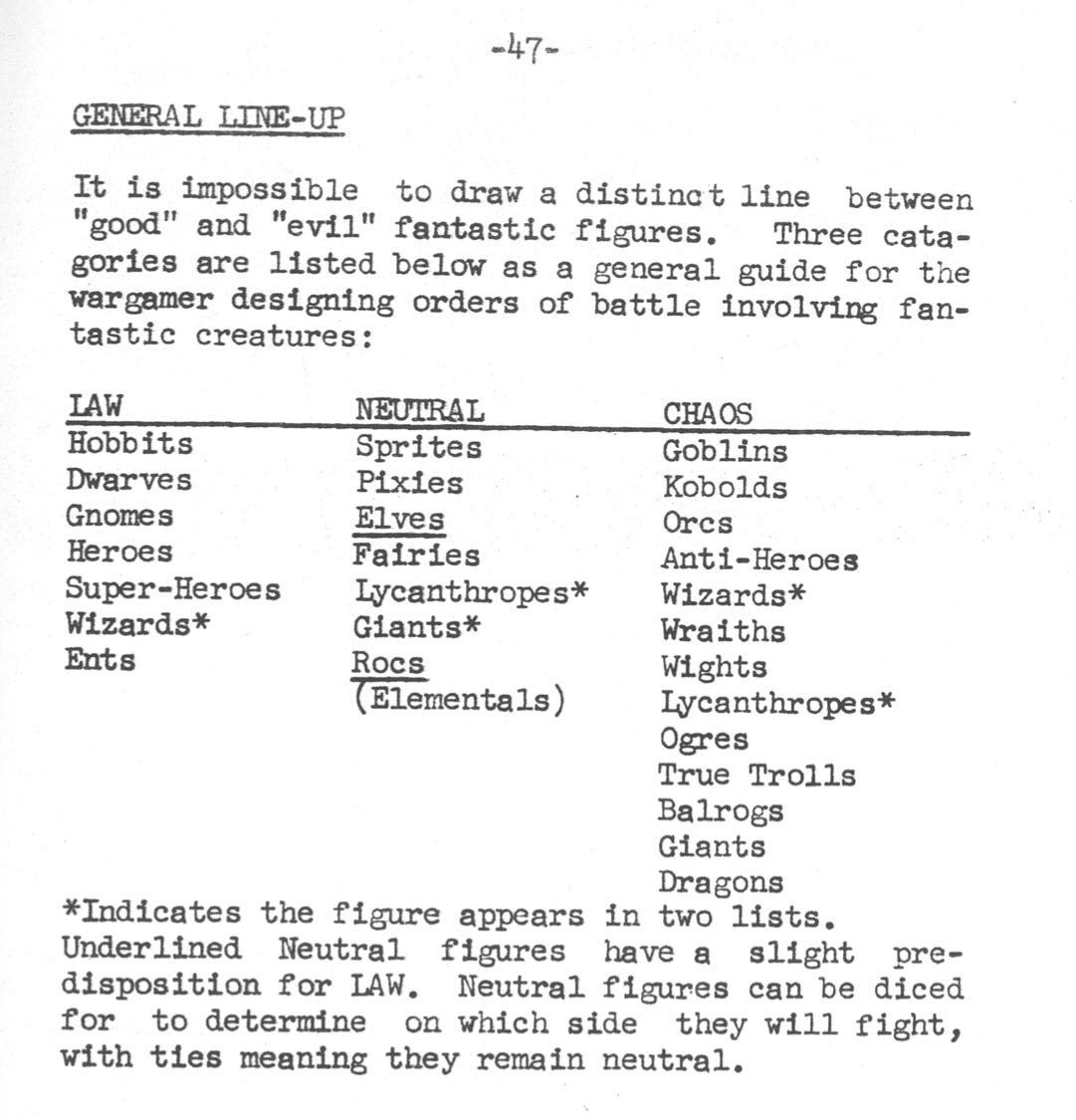
So where did the three alignments come from? Chainmail 1st edition was published in March 1971. It clearly codifies a three alignment system. There is some possibility Arneson had early access to a draft of Chainmail as well. He was certainly collaborating with Gygax on Don’t Give Up The Ship in early 1971. According to the Minneapolis Post, Gary Gygax gave Dave Arneson an early draft of Chainmail in August 1969. (Though, this is contra Arneson’s interview in GameSpy if you read what he says in an uncharitable fashion). Even if Arneson had such an early draft, it was likely sans fantasy section (an addition Jeff Perren said was entirely a Gygaxian addition).
Here are the alignments from Chainmail 1st edition:
First Conclusion
Let’s just assume, arguendo, that Chainmail 1st edition did not land on Arneson’s table until March, 1971. By January 1, 1972 the three alignment system was in place. Prior to this, it is possible that Arneson had a simple “good guys” versus “bad guys” and “baddies” angle in his Blackmoor campaign.
Unexpected Discovery
Is there evidence that Arneson adopted Chainmail 1st edition beyond use for stocking his dungeons? Yes. The fantasy forces for the Egg of Coot for the Year 3 campaign is directly from Chainmail 1st edition. Compare the list below to the one above and you’ll see that these monsters are listed in the same order.
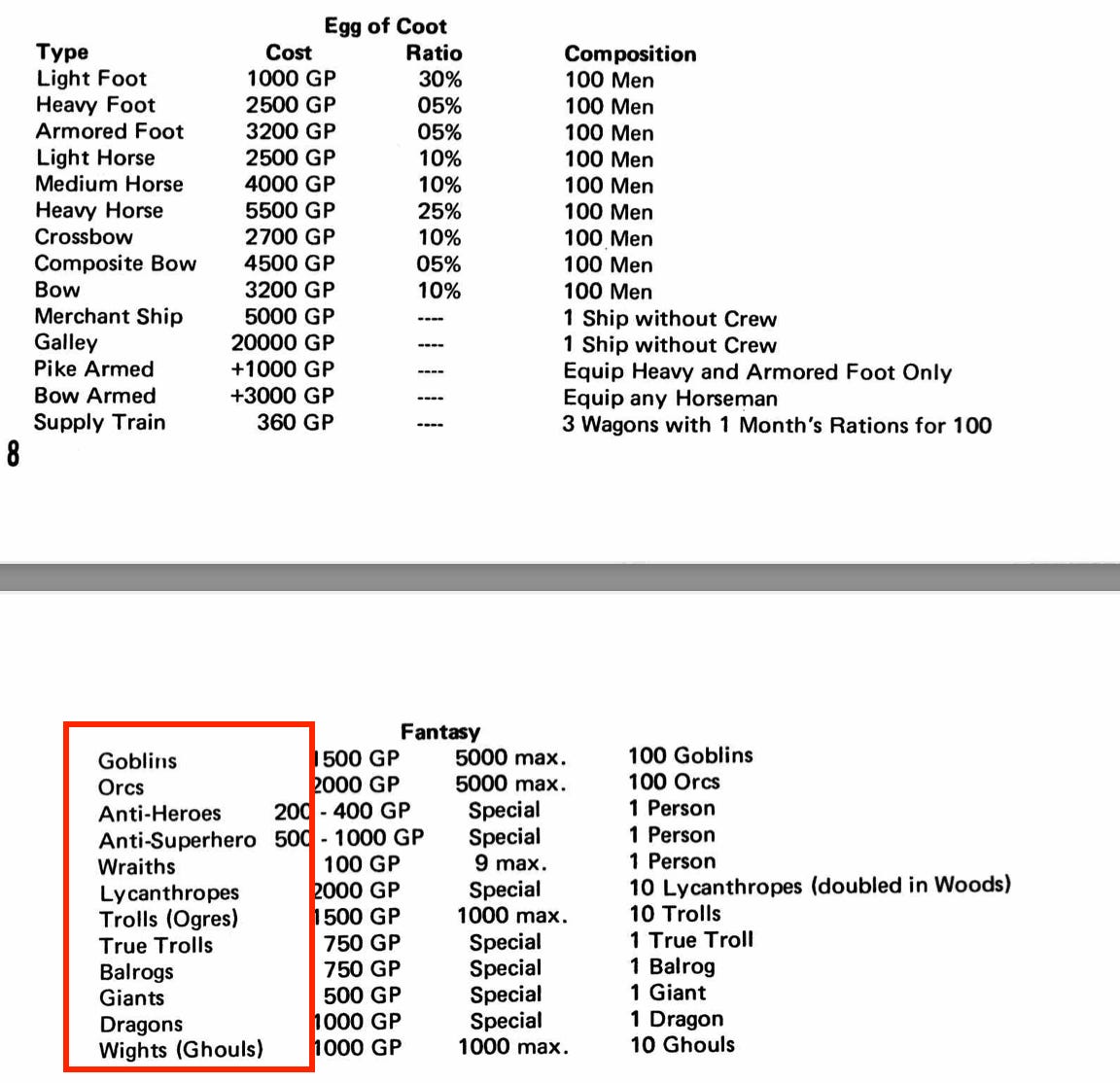
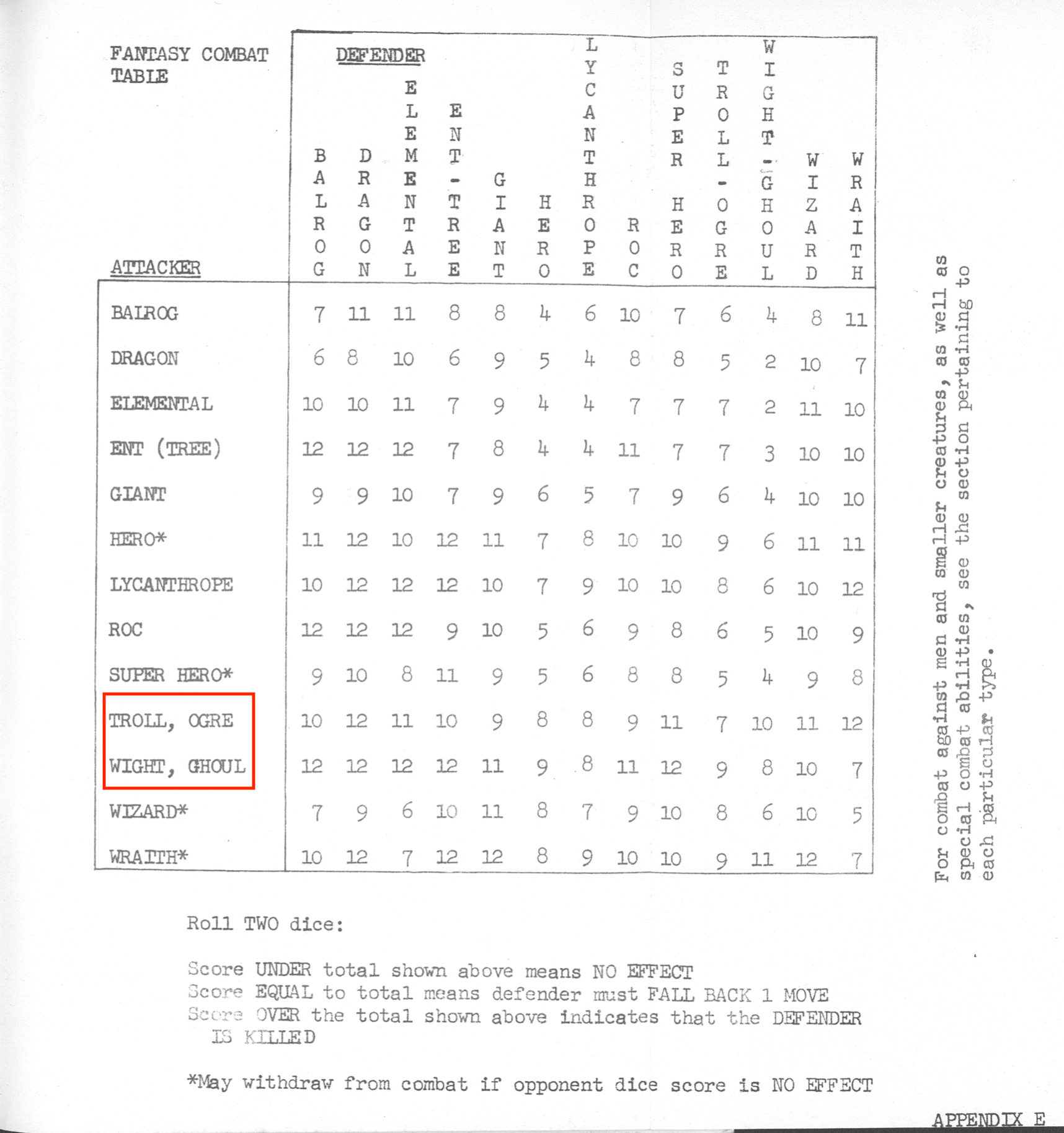
The parentheticals for Trolls = Ogres and Wights = Ghouls is exactly how the monsters are described in Chainmail as they are in the same category for the fantasy combat. See Appendix E from Chainmail 1st edition:
If we look at the table of monsters and alignments from Chainmail 2nd edition, the list for Chaos includes a basilisk at the bottom. There are basilisks in First Fantasy Campaign as wilderness encounters, Loch Gloomen, and in the sections where Richard Snider made contributions.
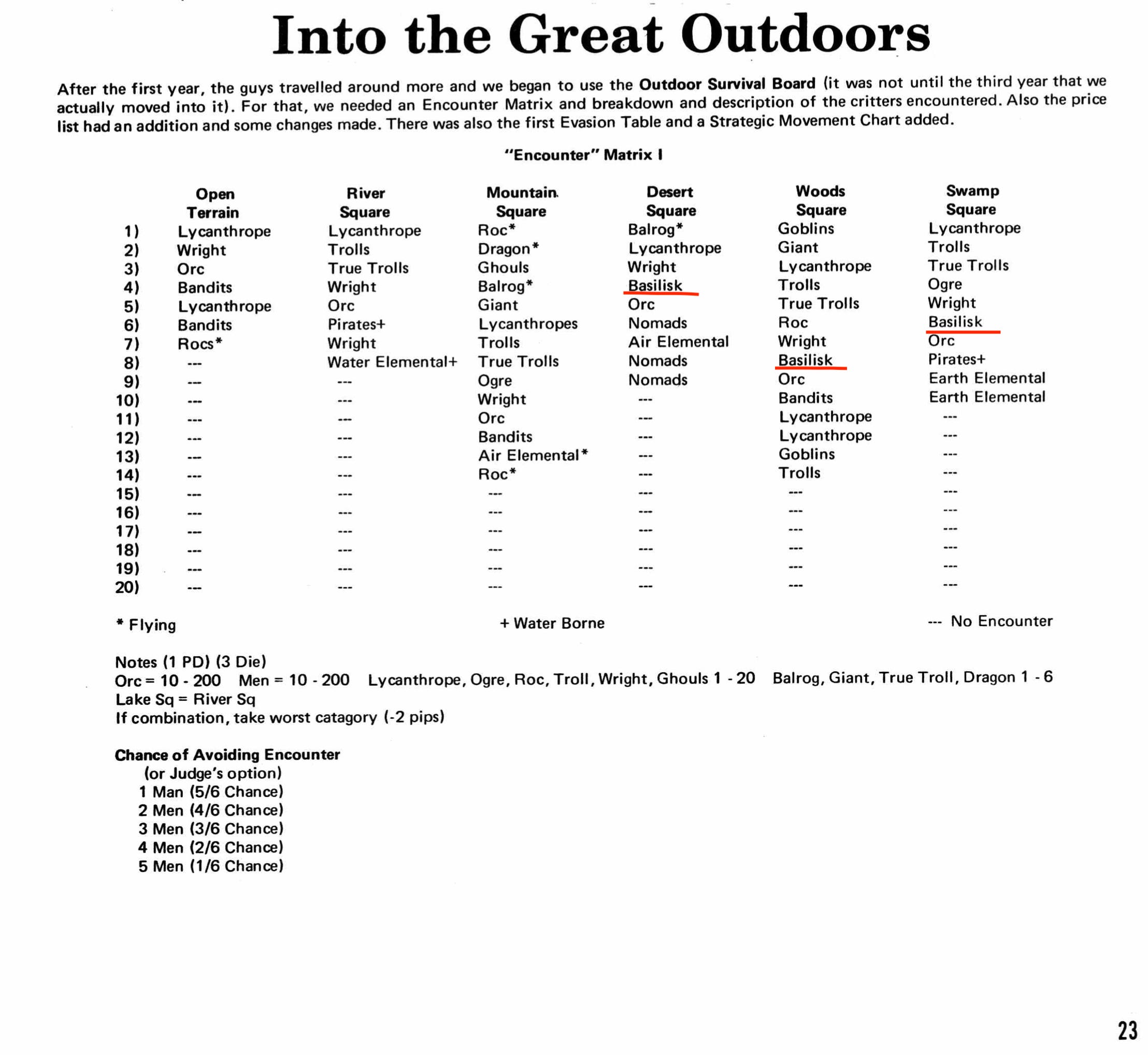
And it isn’t as if Basilisks aren’t mentioned in Chainmail 1st edition. It’s just that they are subsumed under Dragons. Perhaps that is why both Richard Snider and Dave Arneson had explicit descriptions of the Basilisk broken out in the rules.
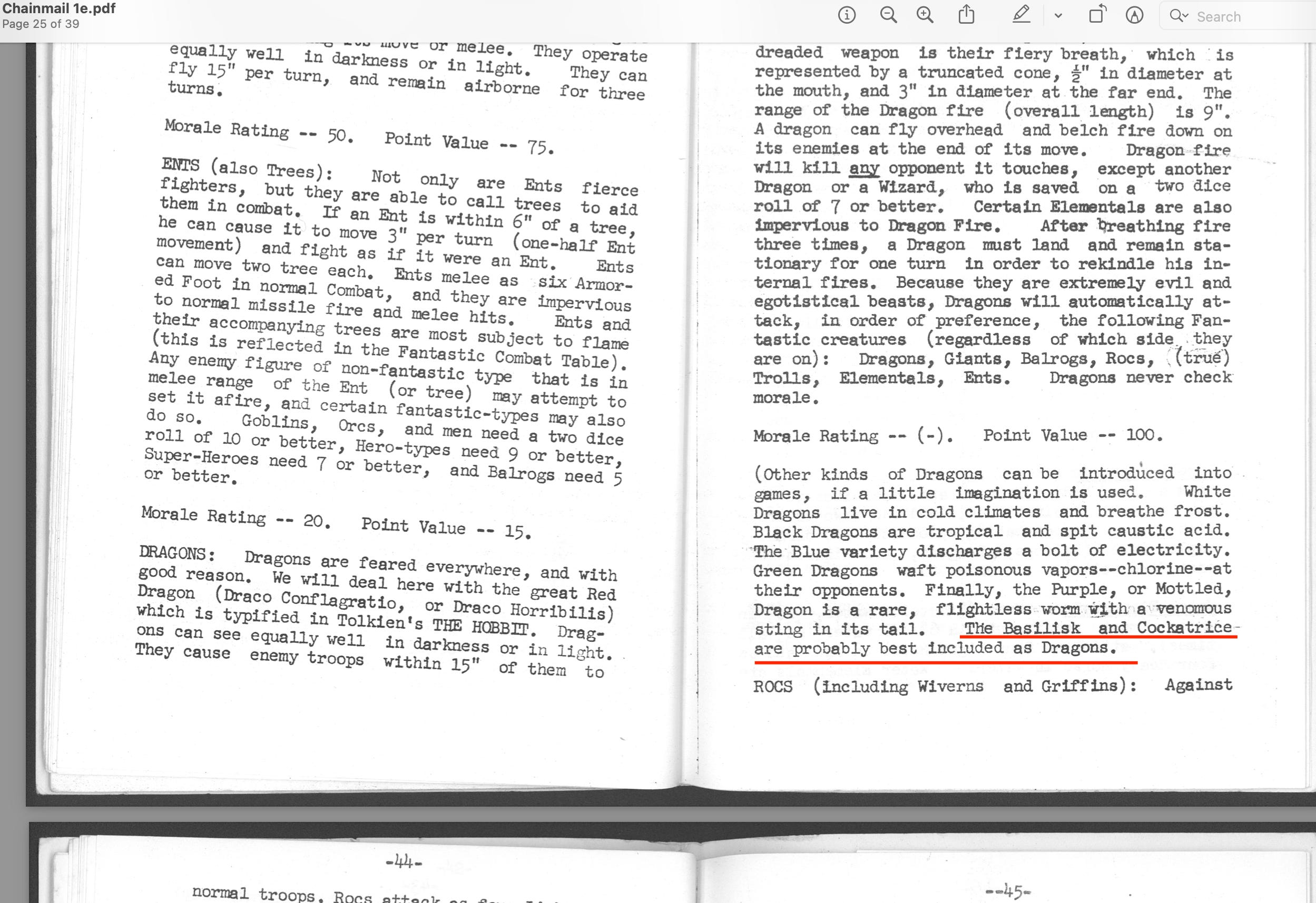
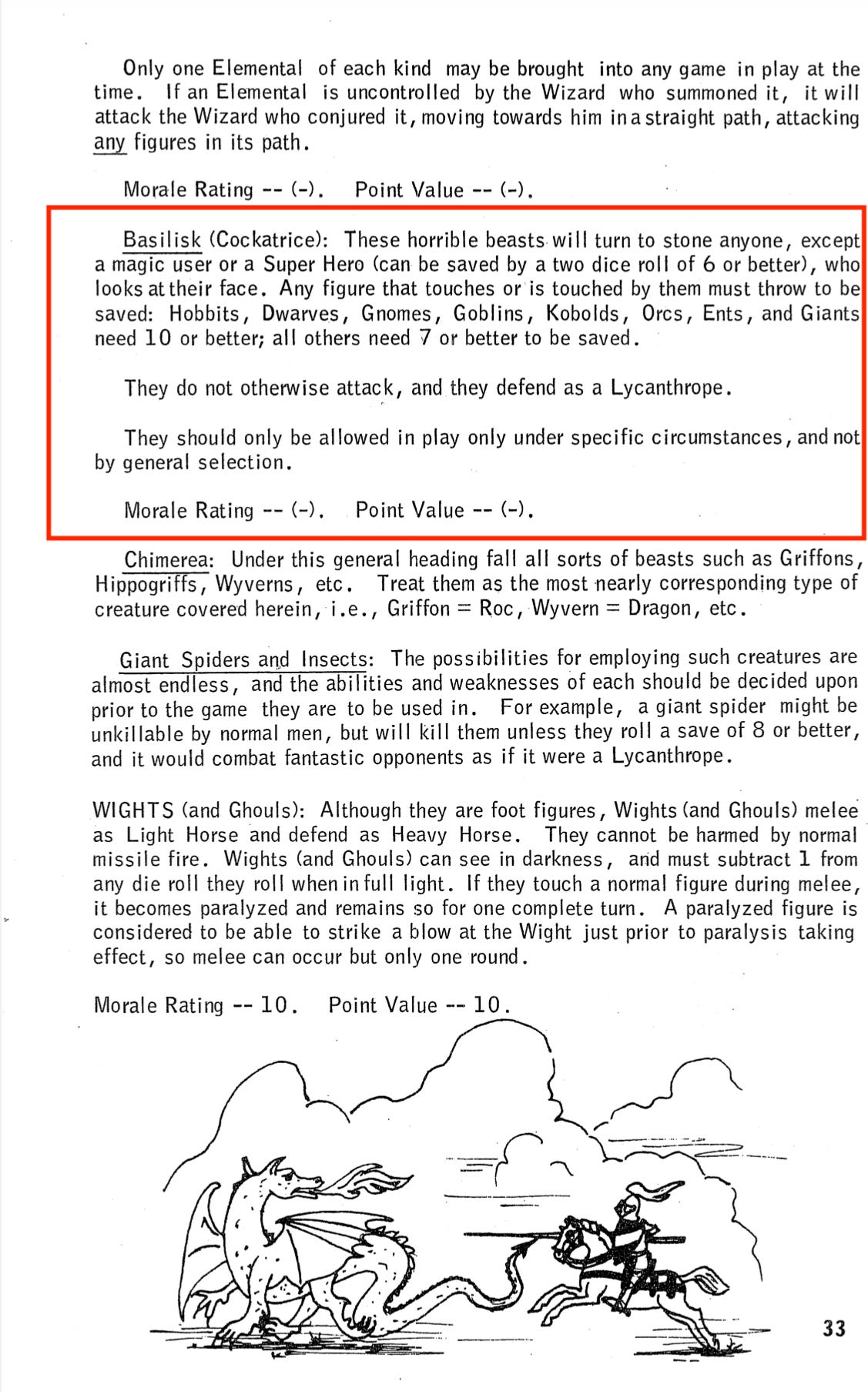
Chainmail 2nd edition still kept the reference to basilisks under Dragons, yet gave them their own description. Snider overrides this saving throw, so it is possible that by the time FFC was assembled, some Chainmail 2nd edition elements were sprinkled in.
A Tantalizing Piece of the Puzzle
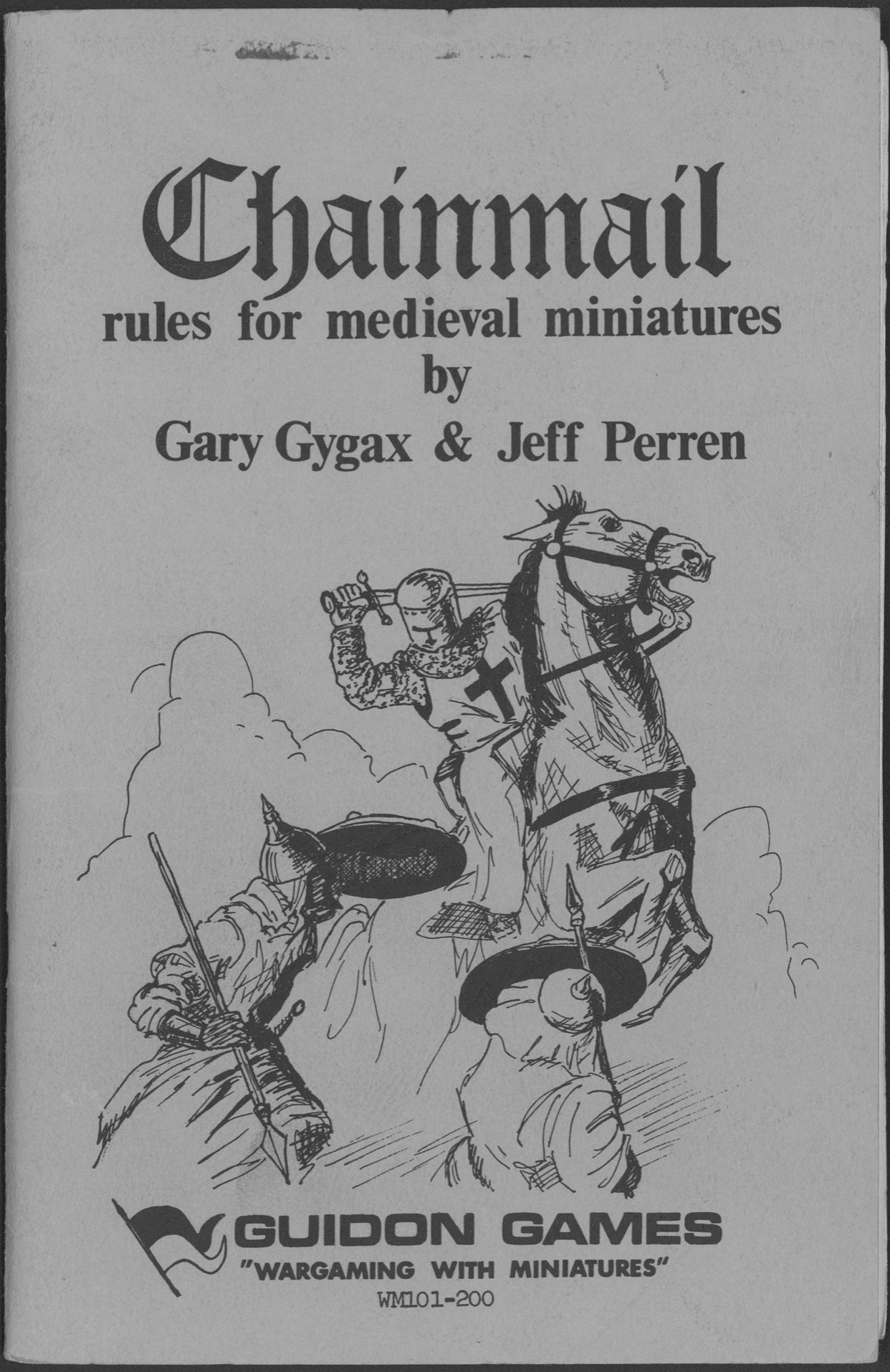
Chainmail 2nd edition has a yellow cover. But now that we have our hands on Chainmail 1st edition, we can see that it has a grey cover just like 3rd edition. Thanks to a timely comment, I have been forced to offer an immediate retraction on this. The scan we have is in greyscale not full color. Per The Acaeum and Grokipedia, the 1st edition would have a yellow-orange color on a heavier, parchment-like card stock
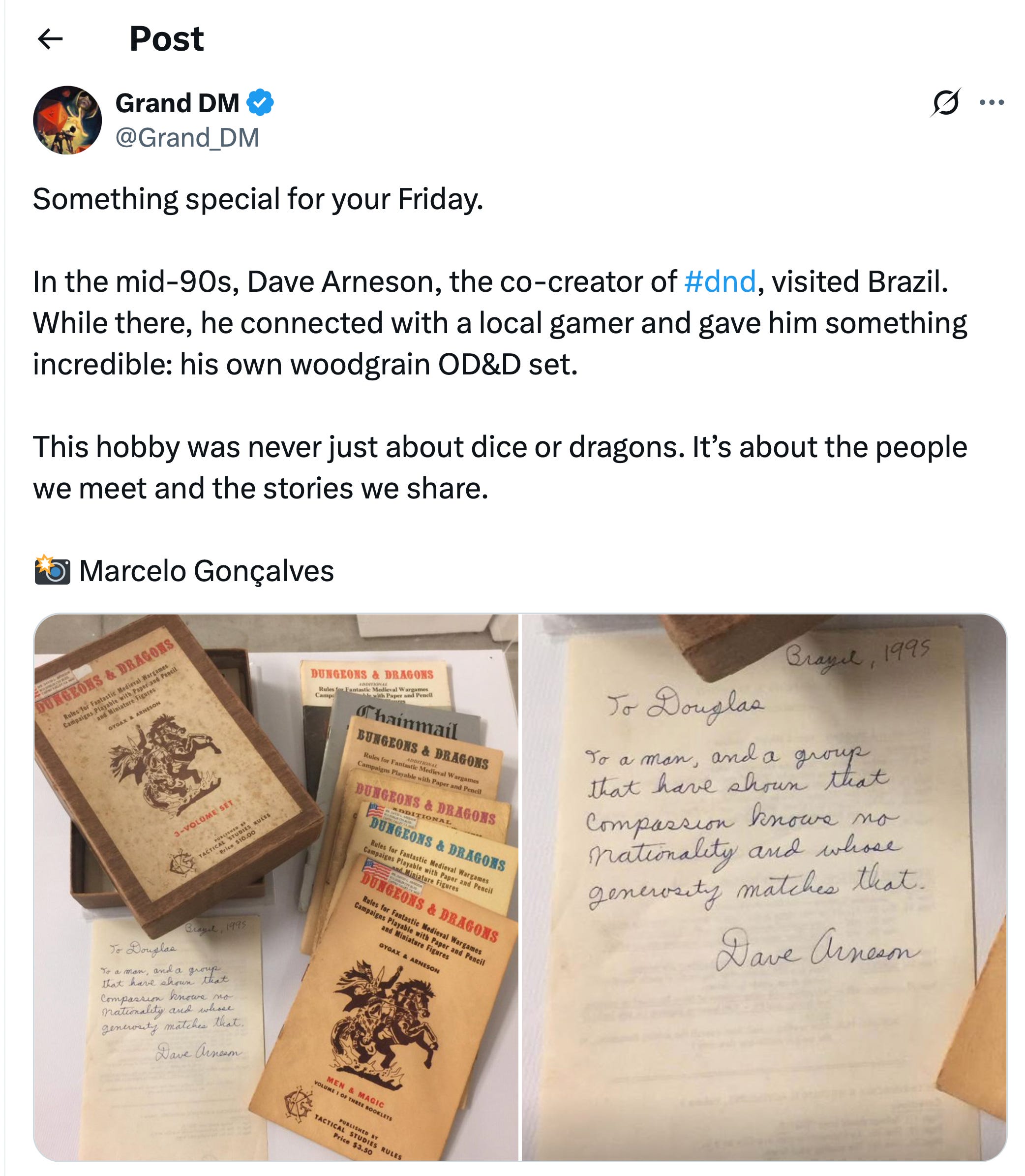
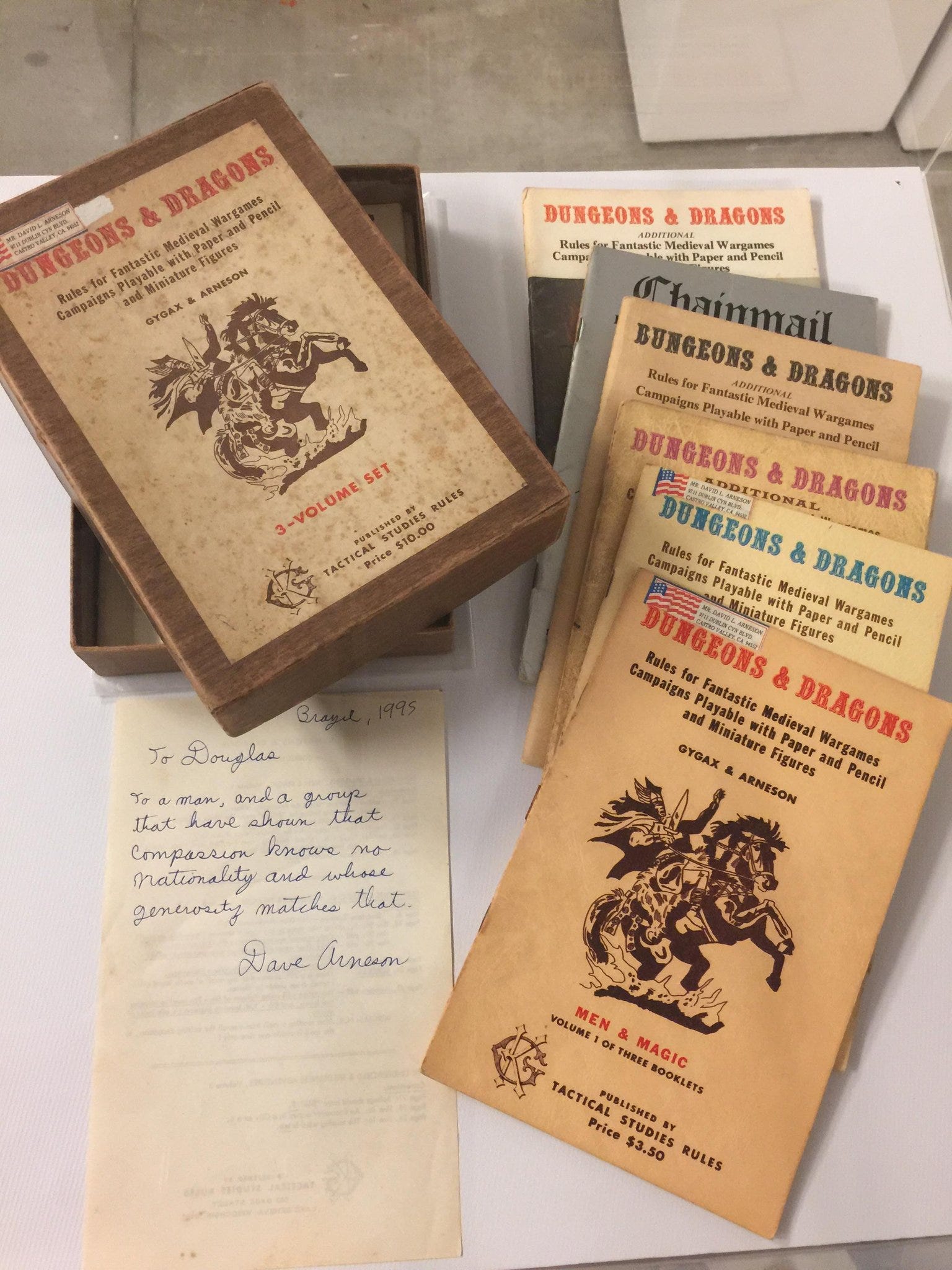
In July 2025, a very interesting post was made on twitter claiming that Dave Arneson’s game materials had ended up in Brazil in 1995. Peeking out from behind the OD&D volumes, we see a grey-covered copy of Chainmail is in the pile which is a 3rd edition copy of Chainmail. Why would Arneson have yet another edition in his gaming materials? What marginalia might be contained within? The secrets of Blackmoor are out there. We just have to keep digging for them.
Final Conclusion
A few people have tried to disclaim the influence of Chainmail on Blackmoor’s development. Many more have said OD&D does not envision the use of Chainmail at all. A pox on both their houses. Get a copy of Chainmail. Play it with your friends. Internalize its rules. Learn its lessons and apply it to your old school campaign. You won’t regret it.
Hello, thanks for your detailed historical research. There's a first note you'd consider: 1st ed Chainmail has a Yellow cover, not gray. If you ask to any of the fellows at the Acaeum, you'll get confirmation of this (the link to the specific web page is below). The copy you have is likely a low resolution scan in black/white or greys.
The copy of Arneson's Chainmail in the picture of the brasilian legacy is for sure a 1st print of the 3rd edition: I own that version and it is the grey cover published by TSR however it is the only one no spiral bound but bound with staples.
Hope it helps and may the fun be always at your table!
PS a second note will follow, sorry but I have no time at the moment to write it!
https://acaeum.com/indexes/rulebooks/chainmail.html
I love reading these. Thank you!